

If you’ve ever wished your marketing could reach people based on where they actually go, we’ve got wonderful news. Geofencing, a location-based mobile advertising modality, specifically targets folks who’ve visited a brick-and-mortar location—think your competitors, places of interests, retail stores, entertainment venues, businesses districts, etc.
And the good news? It’s easier than ever to implement.
WHAT IS GEOFENCING?
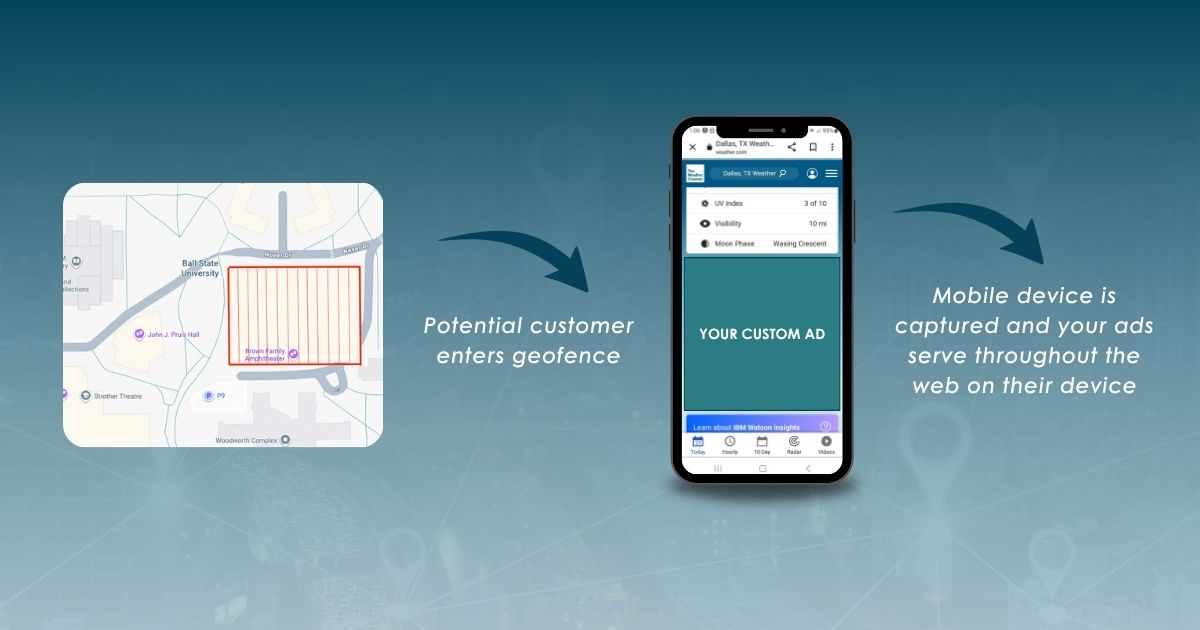
Its power lies in its ability to capture mobile devices based on locations visited, meaning it’s more granular than city or zip code geo-targeting. And it doesn’t have to be limited to simply one location! Essentially, traditional advertising is like casting a wide fishing net into an ocean and hoping to snag a catch—geofencing is letting you fish exactly where the hungry fish already are.
STRATEGY IS EVERYTHING
We totally get it—you’re rightfully already strategic with your marketing. With geofencing, you can be as specific or as broad as you like to further elevate your existing marketing strategy. For example, if your desired audience is vast across multiple overlapping demographics, you can set up your campaign to appeal to that wide range of people. But, you can also narrow your focus to be incredibly specific based on where you know your potential customers are spending their time. Examples include a gym targeting a health-food store, an upscale boutique targeting a nearby salon, a tourist-heavy attraction targeting the nearby airport, etc.
STEP IT UP WITH EVENT TARGETING
Serendipity specifically has worked with multiple clients to set up campaigns centered around the perimeter of a location and nearby hotels for a conference or major event. In short, event targeting—yet another way geofencing connects brands with potential customers.
These campaigns, which last the custom duration of the specific conference or event, have put our client’s brands in the literal hands of thousands within their desired prospective audience (and beyond). Whether it’s student travel industry professionals attending an association’s annual conference and seeing ads for a nearby attraction, music educators attending a clinic and seeing ads for a tour operator specializing in performance travel, or otherwise, our clients have seen measurable increases in traffic to their websites and a higher overall conversion rate following a targeted event geofencing campaign. We’d call that a win.
Audiences that are created (and captured anonymously) during this type of event targeting can be portable and reusable, meaning ads can continue to appear to them for up to 30 days following an event. Talk about longevity!
For example, a home show vendor can continue advertising financing offers, showroom visits, seasonal promotions, or consultations to attendees long after the event closes, giving those who attended a reminder about that home project they’ve been meaning to complete—and an easily accessible avenue for finally acting upon it.
MEASURING FOOT TRAFFIC WITH CONVERSION ZONES
Geofencing delivers on all fronts, but if you’ve specifically got a brick-and-mortar location yourself, you don’t have to guess if geofencing is working for you, thanks to Conversion Zones.
Conversion Zones are a perimeter traced around one or more of your own locations that can measure foot traffic. When the customer enters the Conversion Zone with their mobile device and has previously been served an ad from your brand, the Conversion Zone recognizes the user and attributes their visit as an offline conversion. Pretty neat!
And this is just scratching the surface on all the marketing goodness geofencing brings to the table.
If you’re curious about exploring the world of geofencing and how it can help you find your best customers, let us know! That’s exactly the kind of work we help clients navigate every day at Serendipity Media.
Written by Serendipity Media.